
**This post contains affiliate links and other promotional offers, which means we may earn a commission or compensation at no extra cost to you. As an Amazon Associate, I earn from qualifying purchases.**
Tennessee lakes and rivers
Plan Center Hill Lake trips with swimming areas, cliffs, boat ramps, water clarity, cold-water releases, fishing structure, and visitor logistics.
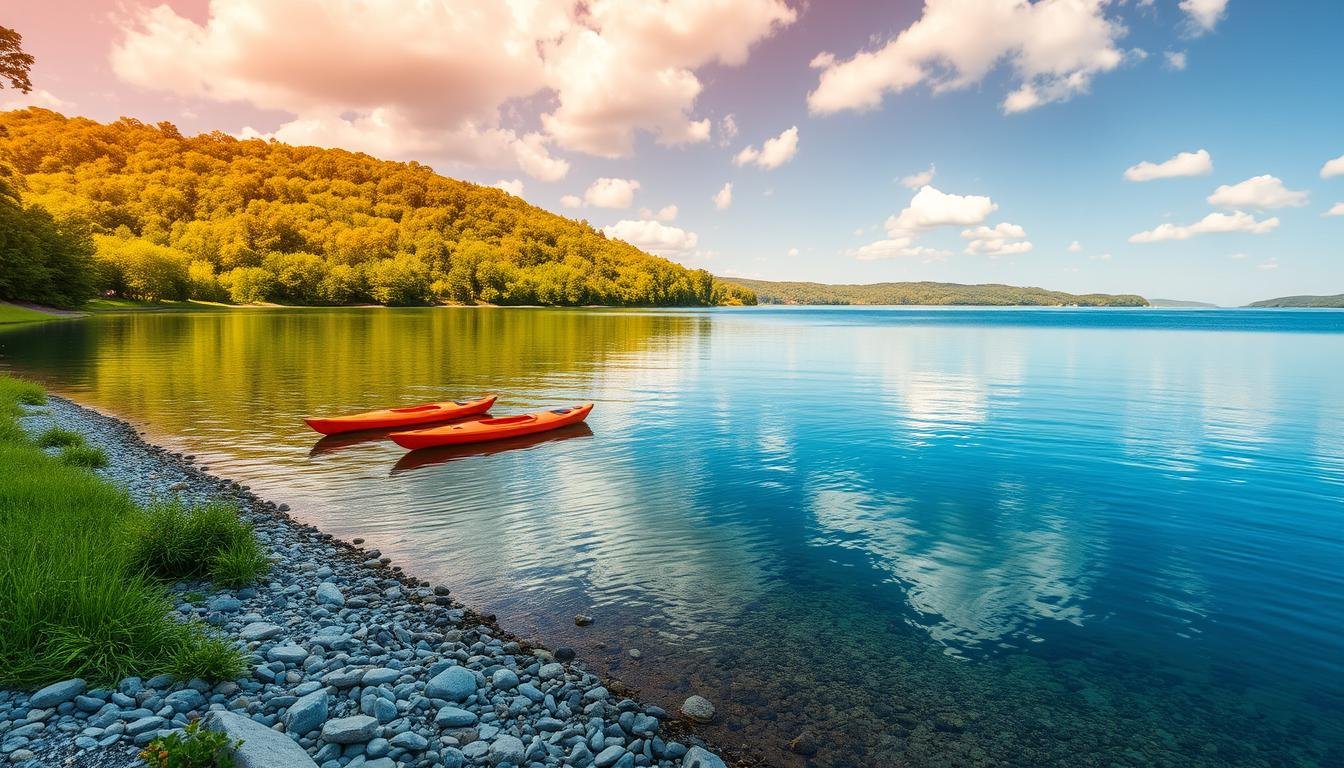
Known for
clear coves
Plan around
steep terrain
Watch
cold releases
Best for
scenic lake days
What Makes Center Hill Different
Center Hill Lake planning revolves around clear coves, steep terrain, cliffs, cold springs, cold-water releases, muddy-water changes after rain, underwater timber, submerged structures, limestone caves, marl deposits, and walleye habitat.
Those details make Center Hill feel more vertical and condition-dependent than a simple beach lake. The same trip can change depending on whether the group is swimming, boating, fishing, diving, exploring geology, or looking for waterfalls.
Clear Coves, Swimming Spots, And Cold Water
Validated Center Hill pages repeatedly point to clear water, coves, swimming spots, falls, cold springs, and release-influenced temperature changes. That is the lake's strongest visitor promise, but it also requires caution.
Cold water, changing clarity, and remote coves should shape the day. Choose legal access, confirm conditions, and do not assume every attractive cove is a safe swim stop.
Cliffs, Ledges, And Steep Terrain
Center Hill's cliffs and steep ledges are part of its appeal, especially for scenery, cliff-jumping interest, and fishing structure. They also make casual planning riskier.
Cliff jumping should only be considered where legal and currently safe, and even then conditions can change. Boaters and anglers should use current maps and local guidance around ledges, submerged structure, and unfamiliar depth changes.
Underwater History, Timber, Caves, And Marl
The Center Hill source set is unusually specific about what lies below the surface: flooded farms and farmhouses, an old schoolhouse, underwater timber, limestone caves, marl deposits, and steep bottom changes.
Those features are interesting for divers, anglers, geology-minded visitors, and boaters, but they are not casual attractions to improvise around. Visibility, rules, equipment, and navigation matter.
Fishing Structure And Walleye Habitat
Anglers should think in terms of ledges, timber, bottom transitions, temperature, and walleye habitat. Center Hill fishing is tied to structure, not just a generic lake shoreline.
Because the same structure that holds fish can complicate navigation, fishing plans should include safe boat handling and current local information.
A Center Hill Day That Matches The Lake
Build the day around one Center Hill strength: a clear-cove swim, a scenic boat route, a fishing-structure plan, a waterfall stop, or a geology/history angle. Trying to combine all of them usually creates more movement than value.
After rain, use muddy-water guidance before promising a clear-water day. During cold-water influence, treat swimming expectations conservatively. For busy weekends, ramp and parking decisions may matter as much as the cove.
Center Hill Lake Gear Notes
For Center Hill's mix of coves, cold water, boating, and rocky access, keep the list practical: adult life jacket, water shoes, dry bag, boat cooler.
Disclosure: As an Amazon Associate, Tennessee Lakes and Rivers may earn from qualifying purchases.
Common Questions
Why is Center Hill known for clear water?
The source set points to clear coves and cold springs, though clarity can still change after rain and by area.
Is Center Hill mainly a swimming lake?
Swimming is a major reason to visit, but fishing structure, cliffs, underwater history, geology, boating, and waterfalls also define the lake.
What should visitors check after rain?
Water clarity, ramp conditions, weather, and whether muddy-water changes affect the planned activity.
More Center Hill Lake Guides
Use these pages for clear coves, cliffs, cold water, muddy water, underwater structure, geology, and walleye habitat.